
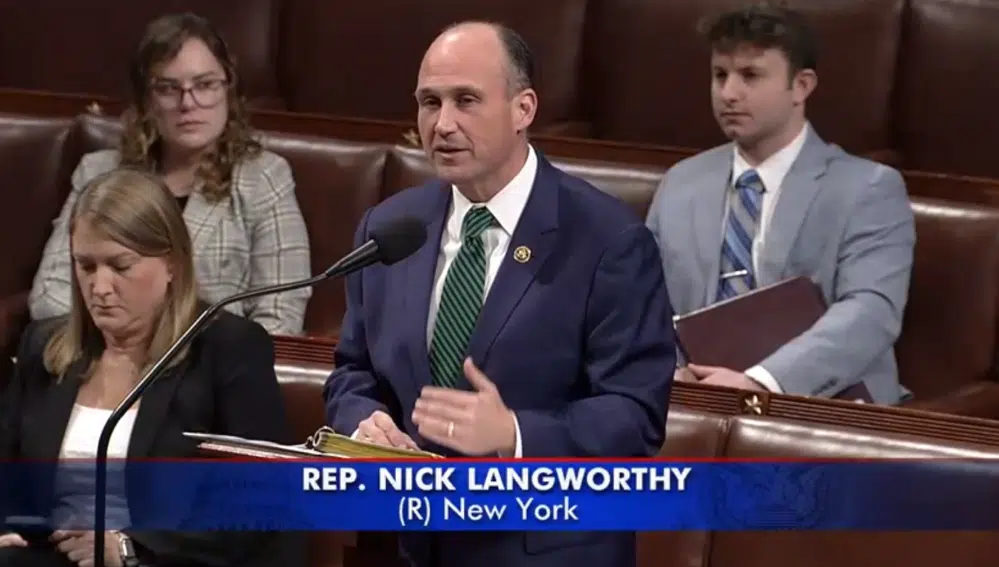
The U.S. House of Representatives has unanimously passed the Source Code Harmonization and Reuse in Information Technology (SHARE IT) Act, a bipartisan bill introduced by Congressman Nick Langworthy to curb wasteful spending on duplicative software development across federal agencies.
Each year, the federal government spends approximately $6 billion on software development, a significant portion of which funds the creation of custom code for agency-specific programs. Without a mandate to share source code, agencies often pay contractors to build software that already exists elsewhere in the government. The SHARE IT Act seeks to address this inefficiency by requiring agencies to share and reuse custom-developed code, reducing duplication and saving taxpayer dollars.
“The SHARE IT Act ensures federal agencies break down silos and collaborate, leveraging existing solutions to save time and money,” said Langworthy. “This legislation will help modernize our government’s IT systems without compromising national security or individual privacy.”

Under the SHARE IT Act, federal agencies must:
- Share custom-developed software in repositories accessible across the government.
- Protect sensitive or classified information by exempting such code from sharing mandates.
- Hold Chief Information Officers accountable for compliance through annual reporting to Congress.
The legislation emphasizes efficiency by utilizing existing platforms, such as code.gov, to facilitate code sharing, eliminating the need for additional funding. Additionally, the bill mandates metadata transparency, allowing agencies to document how code was developed, funded, and shared.
Custom-developed source code created under new contracts or by federal employees must comply with these requirements within 210 days of the bill’s enactment. The act also outlines exemptions for national security, privacy concerns, and legal restrictions, ensuring sensitive information is safeguarded.
The SHARE IT Act is expected to enhance cybersecurity, reduce duplication, and improve efficiency in IT procurement. A 2024 study will assess how code sharing can strengthen agency operations and minimize reliance on redundant software development.
The bill now moves to the Senate, where it is expected to receive bipartisan support. Advocates for government transparency and efficiency hail the legislation as a significant step toward modernizing federal IT practices.

FingerLakes1.com is the region’s leading all-digital news publication. The company was founded in 1998 and has been keeping residents informed for more than two decades. Have a lead? Send it to news@fingerlakes1.com.